
Manufacturing Training & Process Documentation
Operator Training | Process Standardization | Technical Documentation | Knowledge Transfer
Developed a collection of operator-focused technical documentation to capture manufacturing knowledge, standardize recurring processes, support troubleshooting, and improve training and knowledge transfer within a production environment.
Project Overview
While working as a manufacturing team leader and trainer, I recognized that much of the knowledge required to set up, operate, troubleshoot, and maintain production equipment depended heavily on operator experience rather than easily accessible documentation.
I initially attempted to locate existing technical documentation, including contacting an equipment manufacturer for original materials. When sufficient documentation was unavailable, I began creating my own operator-focused resources based on hands-on experience, established shop practices, available technical references, and the knowledge I had developed while operating, setting up, troubleshooting, and training others on the equipment.
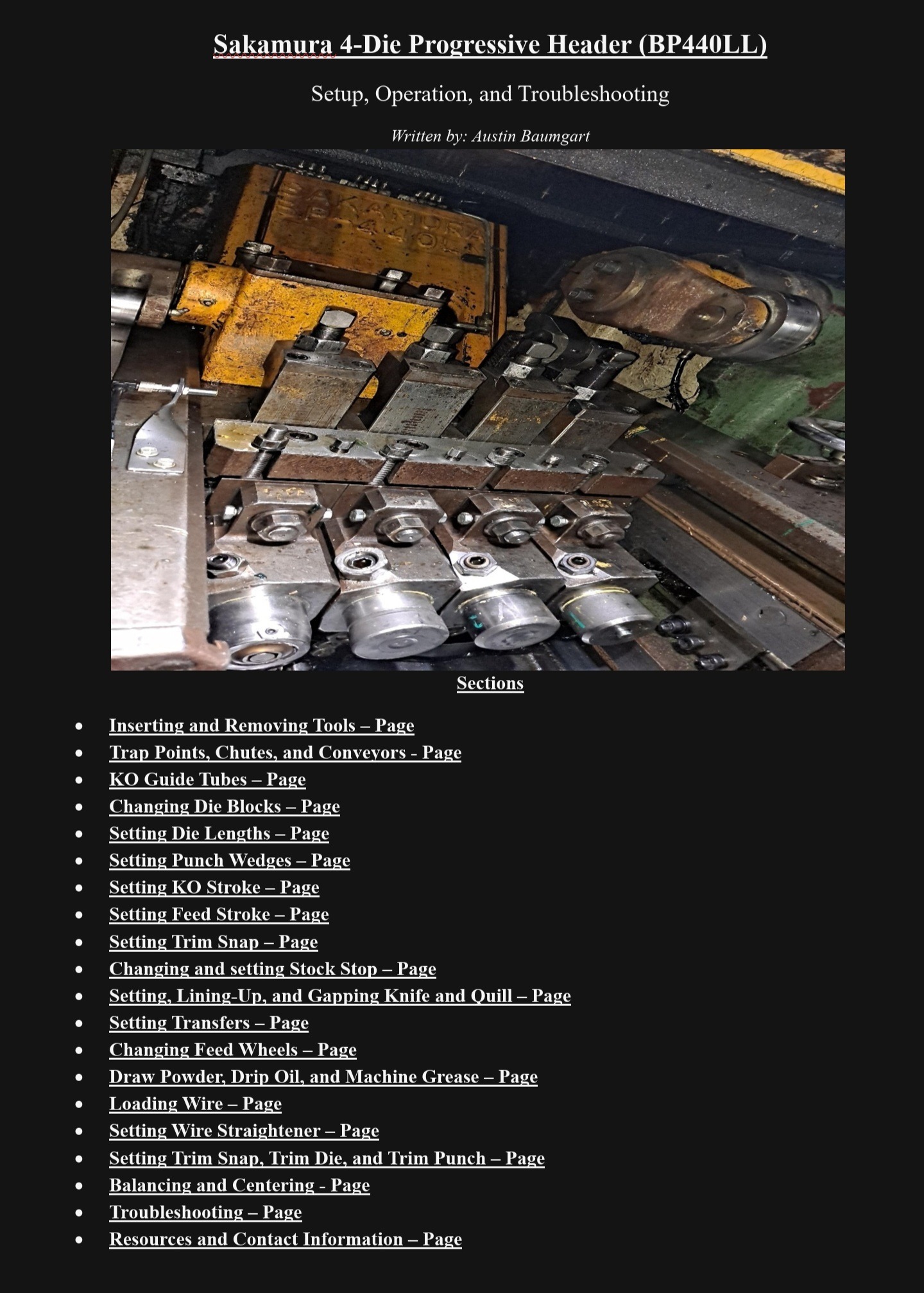
The resulting collection included machine setup checklists, operating instructions, job-specific procedures, troubleshooting references, visual work instructions, training notes, and production-planning tools. I also began developing a more comprehensive setup, operation, and troubleshooting manual for a Sakamura 4-die progressive header.
This documentation effort was self-initiated rather than a commissioned company assignment. I developed the materials to make practical manufacturing knowledge easier to preserve, understand, and transfer between operators. The larger Sakamura manual remained unfinished when I left the organization, but several individual procedures, checklists, and reference materials were completed and used as part of the broader documentation effort.
The Documentation Gap
Manufacturing equipment often develops a body of practical knowledge that exists primarily through operator experience. Setup sequences, adjustment methods, machine-specific behaviors, troubleshooting techniques, and small process details may be understood by experienced operators without being captured in an accessible written reference.
This became especially apparent when working with equipment for which useful documentation was difficult to locate. In one case, a wire straightener in the shop had no available documentation and its proper adjustment was not well understood. I researched available technical resources and located a manual for a similar TAK precision wire straightener. Although it was not documentation for the exact equipment, it provided the closest applicable setup information I could find and helped establish an adjustment method that worked properly.
Experiences like this reinforced the value of preserving practical manufacturing knowledge. My goal was not to replace hands-on training or experienced operators, but to supplement them with references that operators could return to when setting up equipment, learning an unfamiliar process, or troubleshooting a problem.
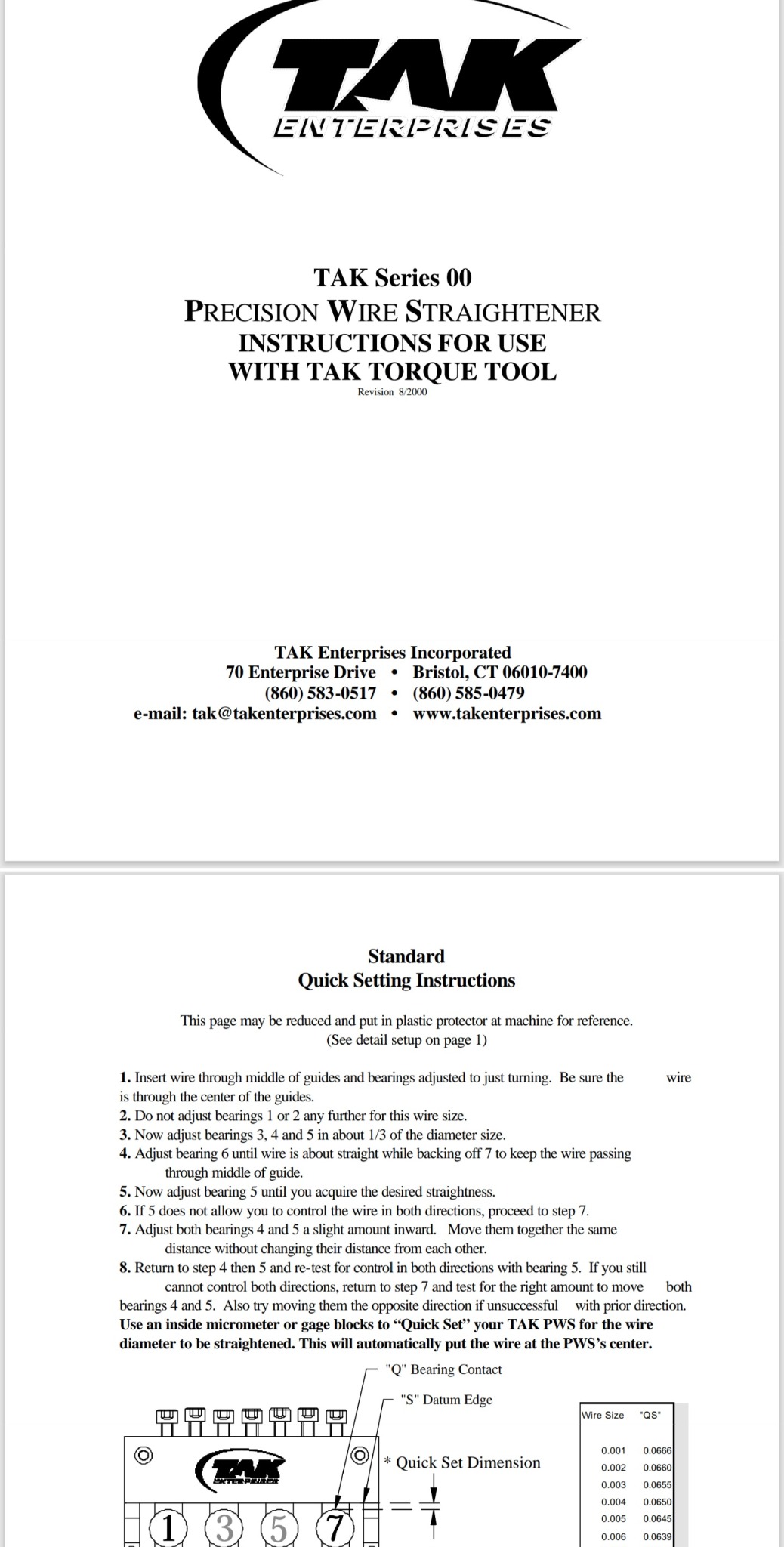
Manufacturer documentation located and evaluated as an applicable reference for setting up an undocumented wire straightener.
The Documentation System
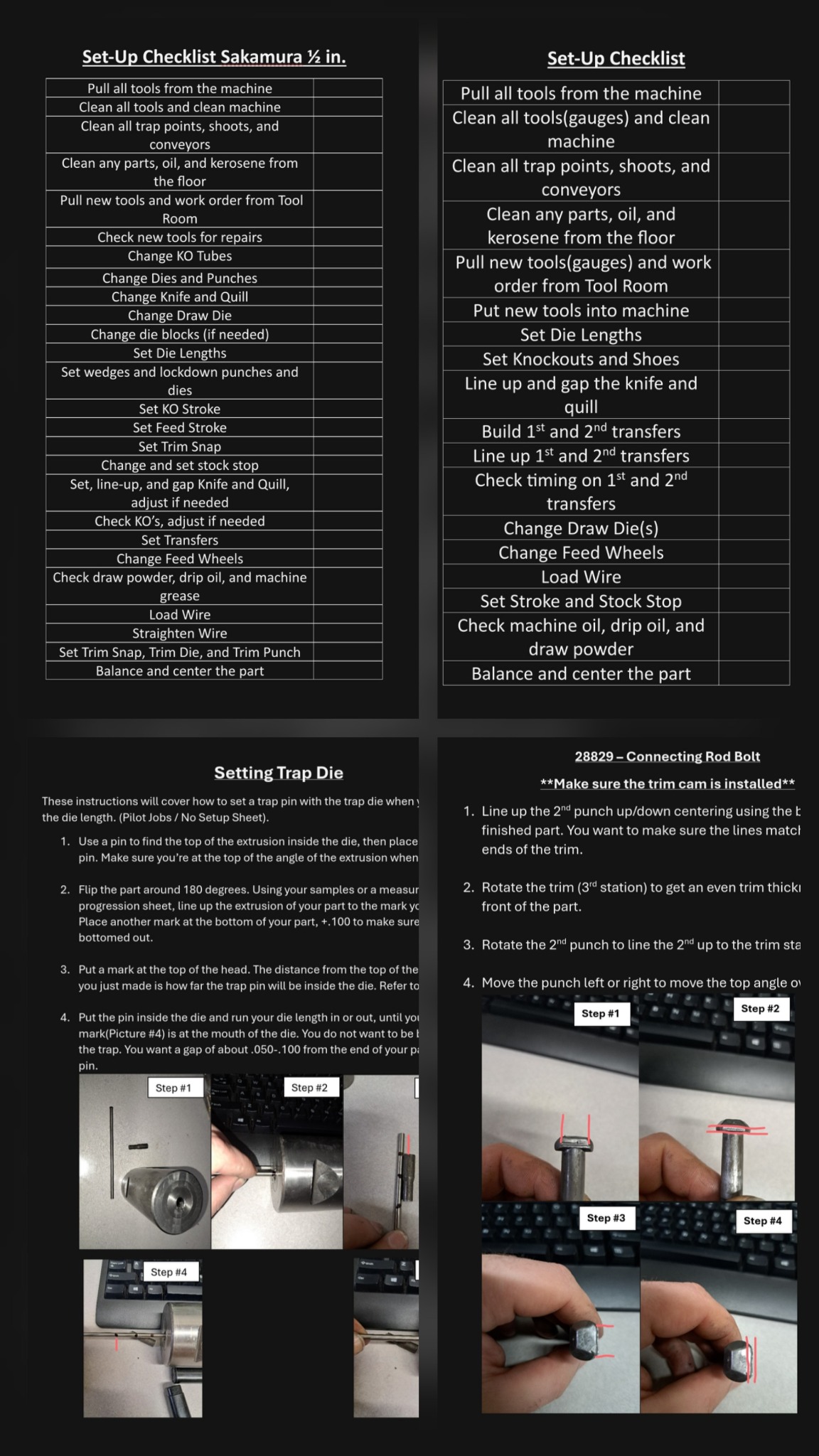
Rather than using a single documentation format for every task, I developed different types of resources based on how the information would be used on the production floor. Detailed procedures captured processes that required explanation and visual references, while checklists condensed recurring setup sequences into practical operator references. Training notes preserved broader shop-floor knowledge, and planning tools helped organize production priorities and machine status.
Together, these materials formed a practical documentation system focused on making manufacturing knowledge easier to access, understand, and transfer.
Equipment Manual
Sakamura Setup, Operation & Troubleshooting Manual
Visual Work Instructions
Setting Trap Die • Connecting Rod Bolt
Setup & Operating References
Sakamura Setup Checklist • General Setup Checklist • Running 1" National
Training & Knowledge References
Miscellaneous Information & Tips
Production Coordination
Warren Header Schedule

Documentation Approach
The documentation was designed around how information would actually be used on the production floor. Recurring setup processes were organized into sequential checklists, while procedures involving physical alignment or machine-specific adjustments combined concise written instructions with annotated photographs and visual reference points.
More detailed subjects were structured as longer-form reference material. The Sakamura manual was intended to consolidate setup, operation, tooling, adjustment, and troubleshooting information into a single operator resource, while shorter documents addressed individual processes that could be referenced independently.
Training materials also extended beyond machine procedures. I documented practical operating knowledge, safety considerations, basic setup calculations, training practices, and production-planning guidance that might otherwise be passed between operators primarily through experience.
The overall approach was to match the format to the task: checklists for repeatability, visual instructions for physical processes, detailed references for complex equipment, and concise notes for practical knowledge transfer.
Results & Value
The documentation effort transformed practical manufacturing knowledge into reusable written and visual references. Machine setup sequences were organized into checklists, visually dependent procedures were captured through annotated work instructions, and broader operating and training knowledge was documented rather than relying entirely on memory or one-on-one instruction.
The project also created a more structured approach to knowledge transfer. Different documentation formats could be used depending on the task—from quick setup references and operating procedures to detailed equipment documentation and production-coordination tools.
Although formal metrics such as training time, setup-time reduction, downtime, or quality improvement were not recorded, the completed materials demonstrate a practical approach to technical documentation, process standardization, operator support, and preservation of shop-floor knowledge.
Multiple Documentation Formats | Structured Setup References | Visual Work Instructions | Operator Training Support | Knowledge Preservation
Skills Demonstrated
Technical Documentation
Technical Writing • Procedure Development • Work Instructions • Visual Documentation • Technical Research • Information Organization
Manufacturing & Process
Machine Setup • Manufacturing Processes • Process Documentation • Troubleshooting • Process Standardization • Production Coordination
Training & Leadership
Operator Training • Knowledge Transfer • Training Material Development • Shop-Floor Communication • Team Leadership • Safety Awareness
Problem Solving
Process Analysis • Practical Problem Solving • Resource Development • Continuous Improvement
Project Brief
This project documents a self-initiated effort to capture and organize practical manufacturing knowledge while working as a team leader and operator trainer. The work included setup checklists, visual work instructions, machine operating procedures, training references, production-coordination tools, technical research, and the beginning of a larger equipment setup, operation, and troubleshooting manual.
The documentation was developed around practical shop-floor needs, using different formats depending on how operators would interact with the information. Sequential processes were organized into checklists, visually dependent procedures incorporated annotated photographs and reference points, and broader operating knowledge was preserved through training and reference material.
The accompanying project brief summarizes the documentation approach, representative examples, and skills demonstrated throughout the effort.
View/Download PDF